
Can Shawn Carter Live?
by James Farr, Blackpressusa
BLACKPRESSUSA – This story isn’t simply about Jay-Z. It’s about what we ask of successful Black people long after they’ve proven themselves.
Can Shawn Carter Live?
I’m serious. Jay-Z can sell out Yankee Stadium—we settled that. Not can he become a billionaire—we settled that, too. Can a Black man build what Shawn Carter has built, own what he’s chosen to own, move the way he chooses to move, and not have every decision become a referendum on whether he’s still “for the culture?”
I’ve been sitting with that. Not because of the concerts. Because of us. Because every time somebody Black reaches a certain altitude, the conversation changes. We stop talking about the work and start talking about the worthiness. We stop asking what was built and start asking whether they still belong to us.
Maybe that’s fair. Maybe it isn’t. I’m still thinking.
Thirty years ago, I met a young Jay-Z in Atlanta.
Nobody knew what was coming. Not him. Not me. Not any of us.
That’s probably why this anniversary stayed with me differently.
Fast-forward three decades.
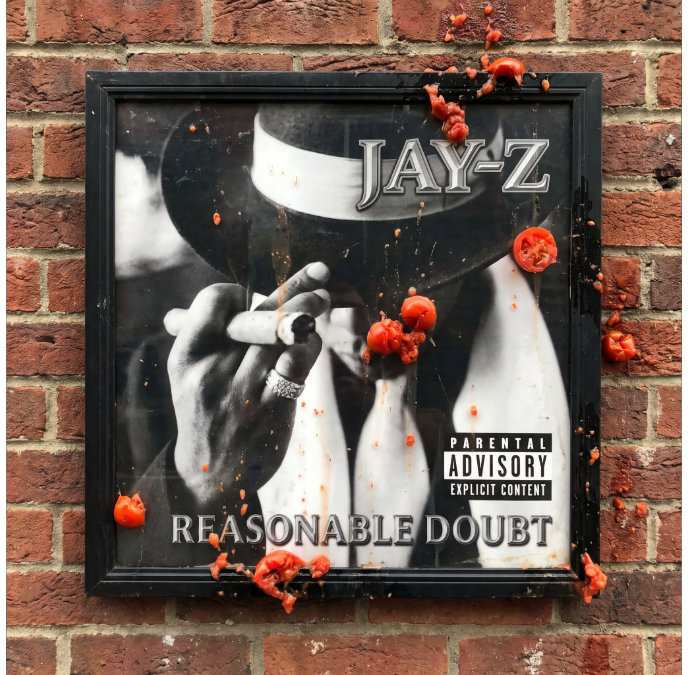
Shawn Carter returned to Yankee Stadium for a three-night residency celebrating the 30th anniversary of Reasonable Doubt and the 25th anniversary of The Blueprint. But from the reporting, the clips, and the campaign Roc Nation built around the performances, it became clear this wasn’t simply about concerts.
Not because it sounded good. Because it raised a different question.
Who gets to preserve the story?
For generations, we’ve watched other people write our history, package it, monetize it, and decide which chapters deserve remembering. This time, Mr. Carter wasn’t waiting for permission.
In GQ, he reflected on the early days of Roc-A-Fella after major labels passed on Reasonable Doubt. He recalled saying, “We going to do this on our own.” The album initially sold roughly 43,000 copies. Without mainstream distribution or marketing, Roc-A-Fella relied on independence, relationships, and street-level hustle to move the record.
That reporting matters because when you remember where Reasonable Doubt started, JAŸ-Z30 doesn’t feel like nostalgia.
It feels like ownership. That’s a win.
Here’s where I got stuck.
I don’t need to explain it.
TheGrio reported that the partnership reignited criticism from Black consumers who were already questioning Target’s retreat from its diversity, equity, and inclusion commitments. For some, the issue wasn’t the vinyl.
It was the symbolism. What it signaled was the rub.
Jiggaman answered some of that criticism during the Yankee Stadium run. Complex reported that he challenged the idea that people selectively decide which corporations deserve scrutiny. His comments echoed what he’d previously told GQ: Black entrepreneurs often have to work within systems they don’t own because those systems still control distribution.
Okay. I hear him. I really do.
As I worked on this column, I went looking for those answers.
I reviewed Roc Nation’s campaign materials alongside reporting from GQ, TheGrio, Complex, and Wired. I found detailed reporting on the performances, the partnerships, the merchandise, and the cultural activation itself.
Wired’s profile of production designer Willo Perron stood out in particular. Perron’s approach intentionally resisted letting spectacle overshadow the artist. Even the production reinforced the larger point: keep the story centered on the artist, not the production.
It means I couldn’t verify them. And if I can’t verify them, I can’t write them. That’s journalism.
Now here’s where I think we get ourselves in trouble.
Sometimes we expect one person to carry the weight of an entire people. We don’t ask that of anybody else. One successful Black person becomes responsible for proving capitalism can love us back.
That’s too much.
Shawn Carter never said he was carrying Black economic liberation on his shoulders. He built a company after the music industry closed its doors. He maintained ownership when ownership wasn’t fashionable. Thirty years later, he celebrated that journey in a stadium, on his own terms, while helping shape how that journey would be remembered.
Respect. Full stop.
Maybe that’s the real tension. Not whether Jay-Z sold out.
We’ve been recycling that argument for years.
The real tension is whether we’ve reached a place where a Black man can become this successful without immediately putting him on trial for it.
Can he celebrate? Can he preserve his legacy?
Can he make business decisions we don’t all agree with and still be recognized for what he’s contributed?
Can Shawn Carter live? I don’t know.
The better question is whether we should let him. Because somewhere between accountability and expectation… between ownership and obligation… we keep asking Black excellence to carry more than excellence was ever meant to carry.
I’m still sitting with that.
Can Shawn Carter live?
