How to Identify AI Language in what you read and watch - Recognizing AI accents is now a form of literacy.
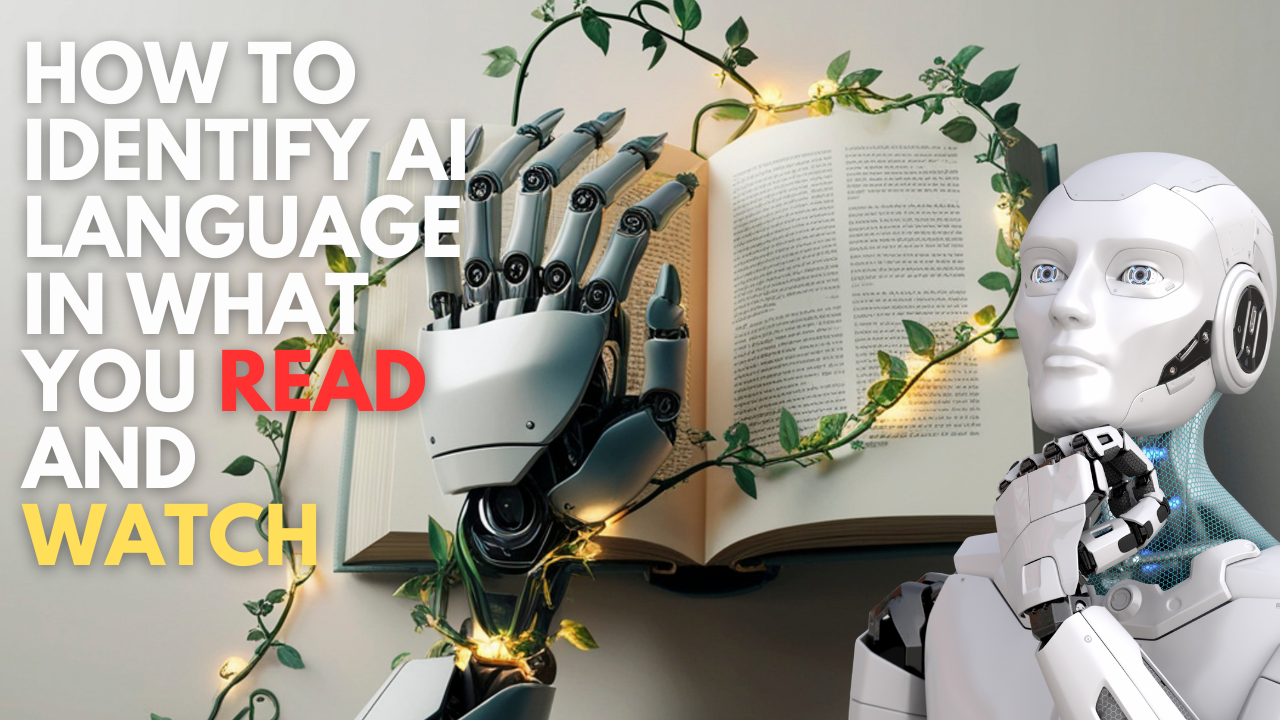
If you have been listening carefully to new videos, analyzing scripts from your most-watched self-help, educational, instructional, and skill-based videos, pop culture stories, and political headlines, you may have noticed that sentences are starting to sound as similar as the last video you watched or post you read.
Artificial intelligence has become so common in writing, video scripts, podcasts, corporate communications, and even television interviews that many people encounter AI-generated language every day without realizing it. Yet after enough exposure, certain patterns begin to stand out. Once you recognize them, they become difficult to ignore, and it becomes what millennials call "cringey."
I am not arguing that everything written with AI is false, unvaluable, misleading, or poorly researched. Many AI-assisted articles contain accurate information and many creators use AI to organize thoughts they already believe.
Here, we will look at specific words and phrases that you can immediately identify as AI. You'll notice the language starts to become excessive, and you're hearing similarities in most of the videos you are watching. As a result, the audience's interest unfortunately begins to decrease and the personal connection is lost.
You may have noticed the same phrases appearing repeatedly across YouTube videos, TikTok clips, blog posts, LinkedIn articles, and even public television interviews. Words such as "clarity," "grounding," "alignment," "journey," "perspective," "framework," "intentional," "navigate," "meaningful," and "authentic" appear far more frequently than they did only a few years ago. These words are not inherently bad, but AI tends to overuse them because they sound thoughtful while remaining broad enough to apply to almost any topic. They sound, well, human. For AI to maintain that human connection, it attempts to relate and fit into language that seems like the right thing to say. As far as AI knows, it is trying to sound as human as possible.
One of the most recognizable AI constructions is the phrase: "This isn't just about X, it's about Y."
For example, a narrator discussing social isolation might say, "This isn't just about social media, it's about connection." A business coach might say, "This isn't just about productivity, it's about purpose." A fitness influencer might say, "This isn't just about losing weight, it's about becoming your best self."
The statement often sounds profound at first, but upon closer inspection, it frequently reframes a simple observation as a larger philosophical insight without adding much substance. AI uses this structure because it creates the appearance of depth, transformation, and relatability. The sentence tells the audience that the topic is bigger than they thought, even when no new information has been introduced.
Another common pattern is the smoothness of the language. Human speech contains detours, interruptions, contradictions, and moments of ambiguity. AI-generated scripts, however, often move with efficiency. Every sentence connects neatly to the next. Every transition feels perfect and every idea appears perfectly organized. People rarely speak with such perfect articulation, so this flawless style ironically makes the writing feel less human
This is not to say that we should all misspell words, misplace commas, or start accepting run-on sentences. The focus is more on identification and awareness of human imperfection and being able to feel that human connection, even in writing, as if you were talking to that person face-to-face rather than knowing you are talking to a computer through a screen. Even though this paragraph followed the same structure I mentioned earlier, I assure you it was crafted by a human. This makes me realize we are facing a new challenge: how can we tell the difference between a genuinely well-crafted sentence and one generated by AI?
Many AI scripts also rely on emotional reassurance. They frequently tell viewers they are seeking clarity, finding balance, building resilience, or stepping into a new perspective. AI tends to validate you heavily in these moments, which can occasionally lead you astray. The language often sounds therapeutic, motivational, and universally applicable. It rarely takes strong risks or makes highly specific observations because AI is trained to appeal to broad audiences.
We then move toward the ending of the script or writing. Human writers often wander toward a conclusion. AI often stops abruptly, like this. After several paragraphs of explanation, the script suddenly delivers a short statement intended to sound definitive and, once again, profound. Like a mic drop, which can sometimes fail and create a cringeworthy secondhand experience.
Some examples include:
"The issue is overuse."
"The answer is balance."
"The solution is awareness."
These final mic-drop statements can seem profound because of the context that came before them. The sentence arrives, the video's narration ends, and the audience is left with a conclusion that sounds complete but may not fully explain anything. What about awareness is the solution? What about balance creates a solution? These are the types of questions I found myself asking when expecting more details to follow and provide a clearer solution to the problem.
Recognizing AI language does not mean dismissing every article, video, or interview that contains it, nor does it mean concluding that the content has no value. Many people now use AI as an editing partner, and some of the ideas expressed are thoughtful. Awareness is where the value lies because, when you begin identifying these patterns, you gain a better understanding of where the language originated and how ideas are being packaged for consumption.
In a media environment increasingly shaped by algorithms, recognizing the AI accent has become a form of literacy. Once you hear it, you rarely stop hearing it.
Have you noticed AI language in online blogs, articles, or video narrations?